By Chloe Wong
Introduction
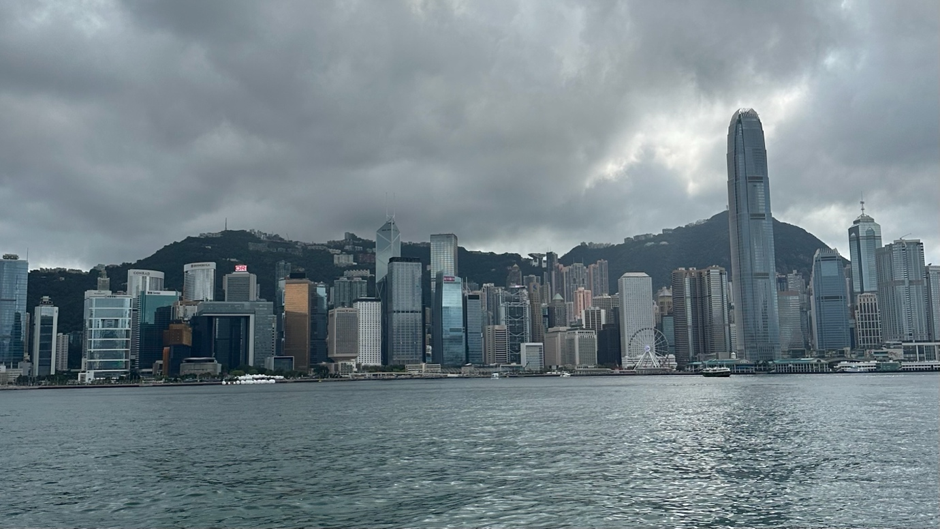
My parents took my sister and I back to Hong Kong back in 2016. At three years old, it was my sister’s first time visiting the city. My parents took us to all the landmarks across Hong Kong: Victoria Harbour, Big Buddha, and The Peak. But only on the ‘good’ days were we able to enjoy our time. My mum would say ‘today is a bad day’ meaning ‘the air quality is too bad, the view has been obstructed by smog.’ And so, even during our short stay in the city, we became victims to the poor air quality.
A year after our visit, Margaux Giraudon was diagnosed with asthmatic bronchitis in 2017 and the impact of air pollution on children who live in Hong Kong became prevalent. Margaux’s diagnosis was described as something akin to a smoker’s cough. Born in Hong Kong, Margaux was only three years old at the time of diagnosis and her lung capacity had already fallen by nearly a third compared to other children her age. Although Margaux’s story is nearly 10 years old, air pollution remains a problem and childhood in Hong Kong continues to be covered in haze. The consequences of air pollution on children remain and the fight for environmental justice continues.
What is Environmental Justice?
Environmental Justice is a people-driven movement in which the concept was first understood in the 1980s following the protests led by Black community members in Warren County. The foundational principle of environmental justice is environmental racism, which is defined by Robert Bullard, as ‘any policy, practice or directive that differentially affects or disadvantages individual groups or communities based on race or colour.’
Thus the conception of Environmental Justice states the need for a fair distribution of environmental resources and share of burdens between all communities. It calls for universal protection for all, without discrimination or bias. Figueroa and Mills identifies dimensions of social justice which are seen in the lens of environmental justice. The blog will explore how distributive and intergenerational justice encapsulates how air pollution in Hong Kong leads to environmental injustice.
Hong Kong’s air pollution regulation
The Air Pollution Control Ordinance (APCO) is the principal regulation that governs air pollution in Hong Kong. It grants the Environmental Protection Department (EPD) power to control air pollution from industry, commercial operations and construction work. The Ordinance sets out Air Quality Objectives (AQOs) which is reviewed at least once every five years.
The Air Quality Health Index (AQHI) is a tool used to help the public take precautionary measures to protect their health regarding the short-term health risks of air pollution. The air quality is reported hourly from monitoring networks across Hong Kong and the scale is grouped into five health risk categories: low, moderate, high, very high and serious. The recommended precautionary actions listed is that when the AQHI reaches levels’ ‘high’ or above, it is advised that people with existing heart or respiratory illnesses and in particular that children and the elderly should reduce outdoor activities to a minimum or even avoid such activities.
Intergenerational Distributive Injustice
Distributive justice in terms of the environment is best described as the fair allocation of environmental goods and burdens. Intergenerational justice emphasises the responsibility of each generation to provide equal conditions and availability of opportunities for younger generations. However, air pollution opens the doors for combined intergenerational distributive injustice in Hong Kong due to the lack of efficient policies take protect both its citizens now and in the future.
Homebody by force
It seems that a frequent ‘protection’ from air pollution as advised by the Government in Hong Kong is to stay indoors at home. When there are high levels of air pollutants like ozone and nitrogen oxide people are advised that it is ‘best’ to stay indoors unless necessary. Whilst it is a short-term solution to reduce exposure to high levels of air pollution, it becomes inadequate when air pollution constantly exceeds that Air Quality Health Index, forcing people to limit their time spent outdoors.
The Centre for Health Protection provides information and guidance regarding the health effects of air pollution. It notes that when outdoor physical exertion is unavoidable, face masks can be worn. However, the advice goes onto to say that common and surgical masks have minimal protective effect against air pollutants. Leung Wing-mo, a meteorologist, explained that masks cannot filter out ozone and nitrogen dioxide, therefore individuals will still be inhaling those pollutants. He advises that it is best to stay indoors.
Additionally, a flaw of the AQHI is that it can only tell you when the air bad today. It tells you how to protect yourself at the present time, but it ignores how repeated exposure of air pollution (whether at the ‘moderate’ or ‘high’ levels) can result in serious harms in the future therefore creating an opening for intergenerational injustice because long-term harm will create inequal opportunities for future generations.
Rethinking ‘Home’
Reducing time to spent outdoors for many means to stay at home. Home is shallowly defined as ‘the place in which an individual lives.’ However, for many ‘home’ is imagined as a place that creates a space of care, safety, and comfort.
However, when the outside becomes a threat and the choice to stay at home becomes obligatory then the concept of ‘home’ changes. The air becomes like an invisible ‘big bad wolf’ which poses a threat to some homes but does no harm to others. So, what house will withstand the ‘big bad wolf’?
Like the three little pigs, the effects of air pollution are not experienced the same by all. Although everyone is exposed to the same polluted air outdoors, staying at ‘home’ is not always sufficient for people to shield themselves from poor air quality. The ability vs the inability of a ‘home’ to function as protection from pollution creates an issue of distributive injustice reflecting the social conditions and disadvantages already faced by certain communities.
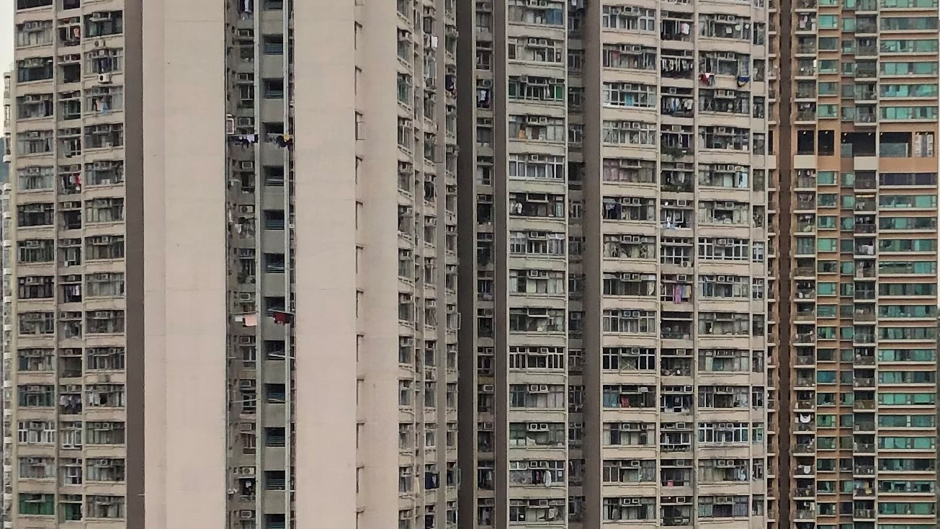
Space is extremely limited from some living in Hong Kong. I remember the stories my mother told me of her own childhood in Hong Kong and she recalls ten people residing in a 2-bedroom apartment at one point. That is the reality of many people with low income, the highly dense high-rise buildings become their home. This is a challenge which has been recognised by the Hong Kong Government in which they describe it is a creation of ‘street canyon effects.’ The high-density urban environment in Hong Kong means that residential buildings are built in compact forms which hinders the natural flow of air. As a result, natural indoor ventilation becomes problematic. Indoor air quality can be improved with space that allows for airflow and ventilation. In addition, air filtration systems or mechanical ventilation can help to support this. However, this is only possible when individuals have the resources to do this, the financial capability and space in their home. For many, staying indoors does not completely shut off outdoor pollutants which this blog will later explore.
A child’s playground
Air pollution is largely produced by the actions of the past and present activity of adults. The burden of pollution has fallen unjustly on children, who arguably have the least control over it but the effects immensely profound for them now and into their future. This situation becomes a form of intergenerational distributive injustice, as the unequal distribution of environmental harms across generations becomes prominent.
Although, the advice to reduce outdoor activities is intended to prevent the risks of harming short-term health, it in turn creates a second layer of inequality with indirect consequences for children. When a child’s home essentially becomes their playground, their developmental environment has been shifted and for some reduced in size. As noted above, pre-existing inequalities in housing conditions become decisive for their ability to fully develop.
Children do not have the power to control which house they call ‘home’. However, it is their home environment that will be essential in promoting their well-being and long-term adaptative functioning. The characteristics of a child’s home environment can be understood in two terms: functional and structural. Functional characteristics include emotional support and interaction whilst structural refer to physical and observable aspects of the home (such as access to play/learning resources, residential crowding, construction). Research has found that low-quality structural characteristics of the home environment has been associated with adverse neurodevelopmental outcomes.
Children in spacious, resource-rich homes will be able to access an environment that can facilitate play, learning and stimulation. While some households do not have the facilities to accommodate the resources due to lack of space in crowded high-rise flats therefore there will be less opportunities for cognitive and social development. This amplifies the structural inequality and redistributes developmental opportunity away from already disadvantaged children.
Thus, the importance of outdoor play for children’s’ growth must be emphasised. UNICEF have noted by spending time outdoors is critical for the development of children’s cognitive, social skills and emotional well-being. Therefore, the AQHI-driven advice which repeatedly restricts outdoor activity unintentionally amplifies the effects faced by children living in low-quality structural home environments increasing the developmental risks. Today’s environmental conditions and poor housing quality quietly shape the present children’s future capabilities, health and life opportunities. Improving both outdoor and indoor air quality is gravely important to prevent a problematic cycle which will be carried forward onto the next generations. Therefore, despite having the lack of power over the structural composite of a ‘home,’ the deeper meaning of a ‘home’ should remain intergenerationally.
Solution or Ignorance?
Whilst staying indoors can help reduce the risks of short-term acute conditions, shutting the door does not ensure safety. Rather than targeting risks in the short term, the government needs to reduce the heavy burden that future generations will carry. Currently, the Hong Kong government has introduced a policy that implements a long-term strategy to tackle air pollution: Clean Air Plan 2035. The aim is to ensure Hong Kong guarantees healthy living by having air quality standards ‘on par with other major international cities.’ The plan outlines the goals and strategies that will be taken to enhance the air quality by 2035 whilst its ultimate aspiration is to meet the air quality guidelines set out by the WHO. Although it has set out bold strategies and actions through green technologies and transport (for example, the adoption of electric vehicles) alongside cooperative regional collaboration, there are still regulatory gaps which have not be thoroughly considered in the 2035 plan.
In April 2025, the AQHI levels reached ‘serious’ due to a dusty airstream at various monitoring stations across the city. At the ‘serious’ level, it is advised for children to avoid staying outside and physical exertion outdoors. Following this, the Clean Air Network (CAN) monitored indoor air quality of several classrooms in different schools across Hong Kong for two days. CAN recorded the daily average PM2.5 concentration level indoors was between 47 and 68 µg/m³ whilst the outdoor air quality objective sits at 37.5µg/m³.
This creates an implication of the AQHI policy, and the precautionary steps used to advise people against exposure to harmful pollutants. ‘Reducing the time of their stay outdoors’ suggests that being indoors is safer however in reality it appears that is not the case. As seen above, the PM2.5 concentration levels of indoor air was significantly higher than the Hong Kong’s AQO, which are already weaker than the guidelines set by the World Health Organisation, signifying that staying indoors is not an effective protective measure but instead can cause more harm. The reliance on protective measures shifts the responsibility onto individuals, without ensuring that safer alternatives exist.
Despite, the AQHI advice and guidelines intention to reduce short term harm it is ignorant to the consequences of intensifying long-term health and developmental inequalities. This is particularly apparent for the population who are already socially vulnerable. Whilst the ambitions of strategies in the Clean Air Plan 2035 are important, the lack of structured policies regarding indoor air quality continues to create intergenerational distributive injustice and risk protecting only a certain communities, leaving the vulnerable in the open. Thus, there is the demand for policies that safeguard long-term well-being both in the outdoor and indoors.
The past may not be controllable, but we can protect the future. Finally, air pollution is an issue the not only exists in Hong Kong but globally and we must all work collaboratively to ensure children across the world experience ‘good days’.