by Omolola Osinowo
There once lived a baby boy in a place he called home. His four walls were infected and damp; the place of refuge meant to protect him from the cold led to his untimely death. That boy was Awaab Ishak, a two-year-old who died in 2020 from prolonged exposure to environmental mould in his Rochdale social housing flat. As I sat reading the coroner’s report, one question echoed through the pages: “How in the UK, in 2020, does a two-year-old child die as a result of mould exposure?”
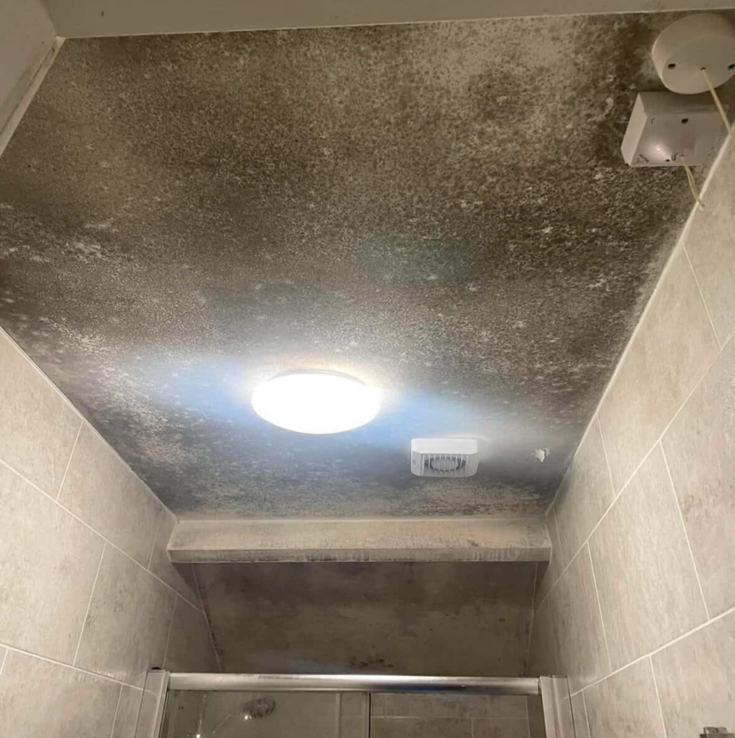
The answer is not a simple housing failure; it is a story of environmental injustice. This blog will pull the mould out of the dark crevices of the UK’s housing system and into the light. I argue that the UK’s mould crisis is a form of “slow violence”, a systemic brutality that disproportionately targets Black and low-income bodies. While recent legal reforms like “Awaab’s Law” offer a partial remedy, they struggle against a legal framework that arguably has functioned as a barrier to justice rather than a tool for it.
Is Slow Violence ‘Out of Sight’?
To understand why mould flourishes in marginalised homes, this blog will define the environmental injustice taking place. Rob Nixon describes “slow violence” as harm that occurs gradually and out of sight, a spectacle-deficient destruction that fails to register as violence because it lacks the cinematic immediacy of an explosion. Under Nixon’s framework, the mould in Awaab’s home was a silent killer, building over the years, making it easy for landlords and the State to ignore.
While Nixon’s assumption of invisibility is compelling, it fails to ask: “out of sight to whom?” For victims living in these “toxic geographies,” the harm is hyper-visible. Thom Davies argues that communities embody an inescapable, slow scholarship, noticing creeping spores and chemical smells, long before the state does. Elena Shurety adds that mould is visually pervasive; something residents “see and touch every day”. It’s the mould’s perceptibility that is a key source of harm and distress for many who live with it.
Therefore, arguably the “invisibility” of mould is not a physical property of the fungus, but rather a political choice. Evidence, through landlords and the state engaging in structured violence/blindness. Meaning, the real injustice is not that mould is mundane or invisible, but rather that those who see it and suffer from it are dismissed. The structured blindness that allows landlords to discredit the marginalised families forced to breathe in these spores daily will be shown and argued below.
The ‘Lifestyle’ Myth: Environmental Racism
The mould crisis is a dire, structural issue. In 2020 alone, 914,000 homes in England had serious damp, and by 2023-24, the proportion of households living with damp had risen compared to a decade earlier.
To address this structural issue, the mould crisis’s racial and economic pervasiveness cannot be ignored. As highlighted by its disproportionate impact on Black and migrant bodies. In the UK, black households are four times more likely to suffer from damp and mould than white households.
The reason for this disparity is arguably that some families (migrants/refugees) are unfairly seen as toxic more easily than others. Awaab’s home was only declared unsafe after he died. However, before that, his family was already treated as dirty, simply because they were Black asylum seekers. This devaluing of life creates a “toxic geography” where the state’s inaction effectively constitutes a form of violence of “letting die.” Decision-makers’ systematic failure to protect minority communities leaves them disproportionately vulnerable to environmental hazards. This appears when authorities don’t take complaints from vulnerable groups seriously. Such racial bias can be highlighted by Somali families stuck in poor private and temporary accommodations with mould and disrepair. For many of them, mould wasn’t just a health hazard; it was a physical sign of racial inequality and a way of making visible the structural injustice they’ve suffered at the hands of the postcolonial state.
‘Lifestyle’
This structural blindness is further demonstrated by the “lifestyle” discourse, which functions under environmental racism. Environmental racism is the intentional or systemic targeting of marginalised communities for exposure to pollution, toxic waste, and other environmental hazards.
These marginalised groups are less likely to be heard when they complain, and less likely to have the resources to fight back. In Awaab’s case, the landlord (RBH) made baseless assumptions that the mould was linked to “ritual bathing” and “cooking habits”, i.e., their “lifestyle”, a clear instance of racial and migrant profiling. By blaming the family’s “lifestyle,” RBH transformed a structural issue into a cultural, individual fault. In 2022, 3.7 million occupied homes in the UK did not meet the Decent Homes Standard: 1 million because of serious damp. Evidently, despite this being a widespread, structural issue, those in power appear to shift the blame onto individuals for the mould crisis. As seen by local authority officials, often blaming Somali bodies – ‘cultural’ practices- for generating the conditions that were making them sick. These flagrant assumptions disregard the structural roots of the crisis. As agreed by the Housing Ombudsman, who, since Awaab’s death, demanded the word “lifestyle” be banished from the vernacular of the housing sector, noting it is an accusation and a barrier to justice.
Racial capitalism
The UK’s poor housing conditions, leading to the mould crisis, have also been linked to long-term policies. Research shows that neglecting repairs has sometimes been used to push social housing tenants out. Such targeted neglect has made homes more vulnerable to toxic mould. The slow cultivation of mould has been used by some landlords to profit from the housing market. Studies exploring racial capitalism in the UK have shown how properties are deliberately run-down to encourage the displacement of tenants, allowing the property to be sold for profit, providing a cash injection for housing associations. Thus, exploiting racial inequalities through poor housing conditions can act as a slow kind of harm that builds up over time and pushes out low-income and racialised residents. This environmental racism, where minority groups are dismissed as dirty, makes it easier to justify neglect or eviction, because the residents are seen as part of the problem. The harm isn’t just physical (mould), but also in the perception, culture, and treatment of a certain class of victims. Mould spreads due to neglect and profit-driven systems, tending to affect communities already treated as less important or disposable. Decision-makers, whether consciously or not, seem to be more comfortable placing harm near communities they value less, and that valuation tracks race. Decision-makers use racialised assumptions to justify exposing certain bodies to harm. It’s clear that this mould crisis is not just a physical issue but is also tied to politics, economics, and even global events. What happens in homes at the micro level is deeply connected to macro-political-economic forces.
Fuel Poverty
Crucially, this blame-shifting ignores the structural reality of fuel poverty. We are currently witnessing a “moisture trade-off”, where 83% of households have changed their heating habits due to rising costs. People are sleeping with the heating off and keeping windows shut to trap warmth, unintentionally creating the perfect breeding ground for spores. Since the 2021-2023 global energy crisis, rising fuel costs have left many unable to heat their homes adequately. The result – mould is significantly higher in fuel-poor households (42%) than in non-fuel-poor households (25%). Therefore, a core cause of this mould crisis is the government’s failure to tackle fuel poverty, particularly through inadequate investment in housing and insulation, and rising energy costs. When families are forced to choose between heating and eating, “lifestyle” isn’t a choice; it is a symptom of economic toxicity.
Awaab’s Law… useless?
The sections above have revealed the structural issues underpinning the UK’s mould crisis: the choice to portray this harm as invisible, the Environmental Racism that dismisses racialised voices as the cause of their own suffering. The racialised capitalism that makes neglect profitable, the macro-economic (fuel poor) strain on households’ choices between whether to eat or heat their home. What remains is the law, the system meant to protect the most vulnerable tenants. This section argues that while recent reform is meaningful and progressive, the legal framework has historically functioned as a barrier to justice rather than a remedy for it. It still fails to address the structural issues underlying the mould crisis.
Following Awaab’s death, the law was forced to respond. The Social Housing (Regulation) Act 2023 (SHRA) – ‘Awaab’s Law’, introduced legally binding timescales on landlords. These concrete timescales empower tenants to hold landlords to account directly through the courts. In 2025, the Renter’s Rights Act (RRA) extended these protections to the private sector, simultaneously abolishing s.21 no-fault evictions – landlords’ primary tool for silencing tenants who dared to complain. Additionally, the Act provides stronger protections against backdoor evictions by ensuring tenants can appeal excessive above-market rents intended solely to force them out. This is meaningful reform; it tackles the lack of accountability that landlords have tried to push aside. It also helps provide tenants with security, making them more likely to advocate for better housing standards. But reform is not justice, and the law’s architecture reveals its limits.
Ubiribo v Notting Hill Genesism, Ms Ubiribo had raised mould complaints with her landlord (NHG) since 2014. By 2025, her son had a confirmed allergy to Cladosporium mould, described by his GP as “a direct result of the damp environment,” with urgency that “cannot be overstated.” NHG kept her in Band B (non-urgent) and refused to rehouse her. When she applied to the High Court for an injunction to prevent a suitable property being allocated to someone else, NHG allocated it to someone else anyway. NHG proceeded with the allocation, knowing the court was still considering interim relief. Ms Ubiro’s injunction request was refused, not because the situation was not serious, but because the property was already gone. The law had been outmanoeuvred by administrative evasion.
This is the central tension the SHRA/RRA has not resolved. Though the legislation attempts to close the landlord-tenant power imbalance. However, Ubiribo occurred under the existing social housing framework, with all its protections, and still failed. The question is not only what rights tenants have, but also whether those rights are enforceable by people without lawyers or without the resources to sustain litigation. The racialised, low-income tenants at the heart of this crisis highlight the gap between law on paper and justice in practice.
The problem is not the absence of rights but the absence of power to enforce them. As Awaab’s Law Impact Assessment itself concedes, tenants must still pass through a landlord’s complaints process before the Ombudsman can intervene. Paradoxically, this system relies on the very institution causing the harm to process the complaints against it. Yet, consider minority groups under cultures of oppression, who fear what might happen if they were to report, or those coming from cultures where complaining against authority carries serious consequences. Particularly for marginalised groups who face cultural or linguistic barriers, how can a legal protection that depends on reacting to these victims’ complaints ever be effective in tackling this mould crisis?
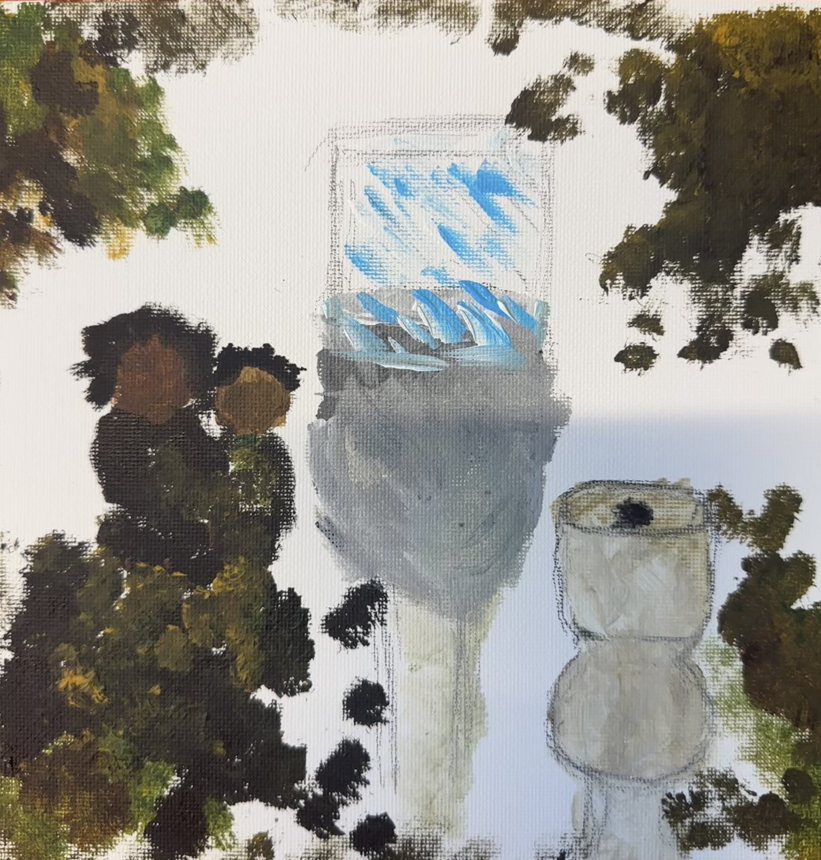
Tiffany, a mother of three, reported mould over ten times. Her landlord washed the walls. The mould came back. Awaab’s father initiated legal proceedings. Repeatedly complained about the mould. RHG made no effort to treat the mould, nor improve ventilation, nor track the source of the damp. The mould stayed.
Awaab’s Law mandates a timeline for response; it does not mandate a cure. A landlord who treats the symptom every twelve weeks while the structural causes (inadequate insulation and ventilation, cost-of-living crisis, limiting a household’s choice and ability to heat their homes) remain unaddressed, yet remains legally compliant.
The mould returns. The harm accumulates. The slow violence continues right on schedule.
 Omolola Osinowo is an LLB Law Graduate from the University of Southampton and a Future Trainee Solicitor at Paris Smith LLP. Her interests include environmental issues, human rights, sustainability, and the role of law and policy in advancing social justice.