The thing that makes writing law a little bit different from other kinds of writing, is that most of us are not allowed to do it. Law-writing is reserved for a small number of authorised and authoritative authors – the judges, legislators, regulators, administrators and policy-makers who write the words that are laws – legislation, regulations, judgements, the ones who hand out licenses and permissions, jail sentences and fines, who award land entitlements and affirm or deny claims to rights, dignity, identity, money and who, in doing so, change the rules that shape our lives.
Law is the stuff with which we build our communities, shape our societies, and construct our worldly relations. And when you have the power to write law, you have the power to construct the world we all must live in.
That power has, for much of history, been held by a remarkably small and homogeneous group of people. A group of people who have imagined and then legislated worlds built all too often on inequality, racism, and misogyny. The rest of us — law’s subjects, law’s objects, sometimes law’s casualties — do not get to write the law. We get to be written.
It is within this heavily constrained and limited authorial space that legal activism and resistance usually takes place. Resistance has traditionally consisted of actions like lobbying government, submitting policy briefs to Parliament or amicus briefs to court, or calling for participatory processes in which people might tell decision-makers what they want. They petition, they protest, they try to vote in the right sort of law-writers.
This is important work. And sometimes it succeeds. But since law can only be written by this tiny group of authorised, authoritative authors, this mostly amounts to pleading with the powerful, and pleading with the powerful has its limits.
And so, some people have decided to try something different: people who are neither authorised nor authoritative in the right ways have decided to try their hand at a little resistant law-writing. In doing so, they engage in a resistant imagination, conjuring up a different world where laws are written like poems or stories or workshopped like plays.
Here are two examples of this practice of resistant writing of the law.
Example 1
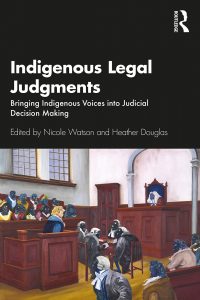
The Indigenous Legal Judgements Project edited by Nicole Watson and Heather Douglas
Brought together by Nicole Watson and Heather Douglas, and inspired by other critical judgments projects, teams of Indigenous scholars, lawyers, activists, and community members took landmark judicial decisions that have historically dispossessed, silenced, or harmed Indigenous Peoples and have rewriting them in a way that centres Indigenous stories, identities, law, knowledge and legal values.
The exact form of this rewriting varied depending on the author. Some approached it in a manner that is deliberately constrained: they worked within the formal conventions of judicial reasoningand writing — citing precedent, engaging with the record of evidence, applying legal doctrine — but this time with full regard forIndigenous law and testimonial authority. In colonial jurisprudence, Indigenous people have appeared as objects of law — to be governed, assimilated, or removed — rather than as legal subjects with standing, authority, and sovereign capacity. These rewritten judgments perform a reversal: Indigenous Peoples are law’s authors, they occupy the bench, write in the judicial “I,” and exercise the sovereign authority of legal reasoning.
Others approached the project from the perspective that settler law is structurally racist and that rewriting these judgments to fully account for Indigenous humanity, authority, and sovereignty requires an entirely different kind of writing.
Alison Whittaker, for example, wrote a poem for the collection called judgments trying to imagine a way out of the racism embedded in settler law without, as she put it, replicating the structure. The poem consists of three-word phrases that most frequently appeared in the judgment and in doing so shows “that over time, the … laws have lost meaning so that they have become mere words on a page.”
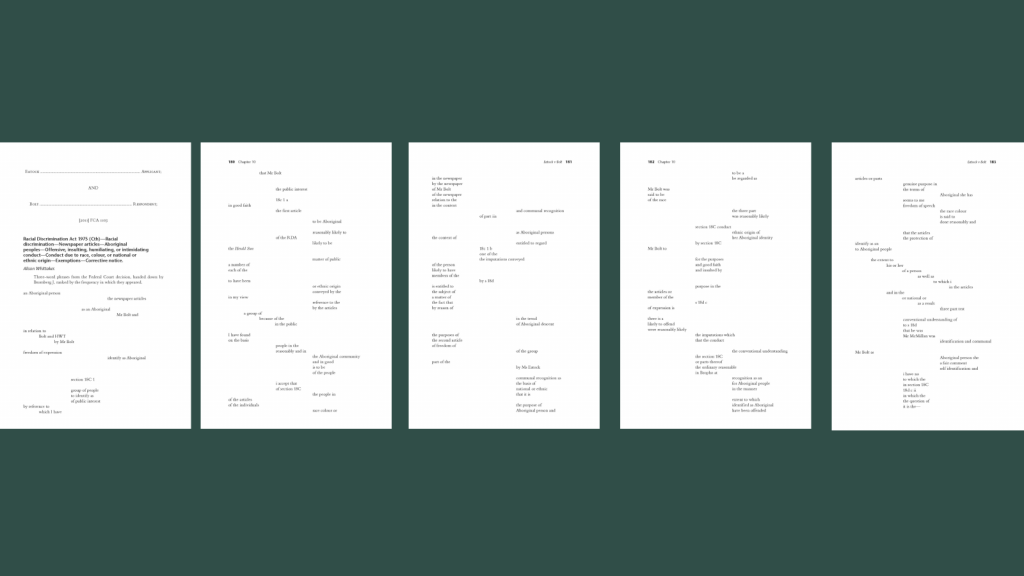
The Rewriting is an act of counter-memory, refusing the legal archive as a neutral record and insisting on its character as a site of contested truth.The rewritten judgement or poem or story becomes a form of archival intervention, a new historical legal document, a retrospective method of legal interpretation, a resetting of precedent. This is not a project of fiction or fantasy but rather one of building genuine multi-juridical and historical legal orders.
Example 2
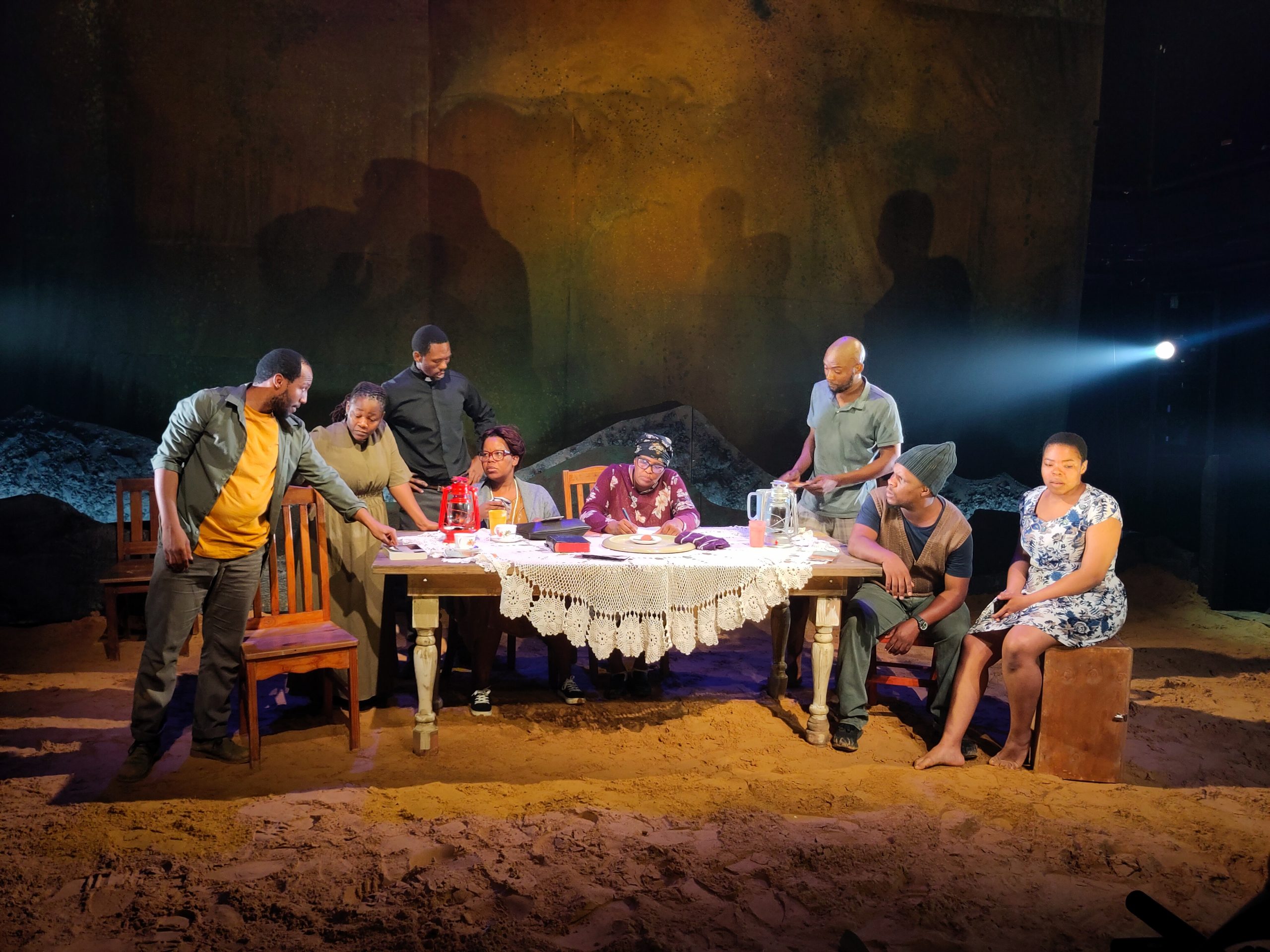
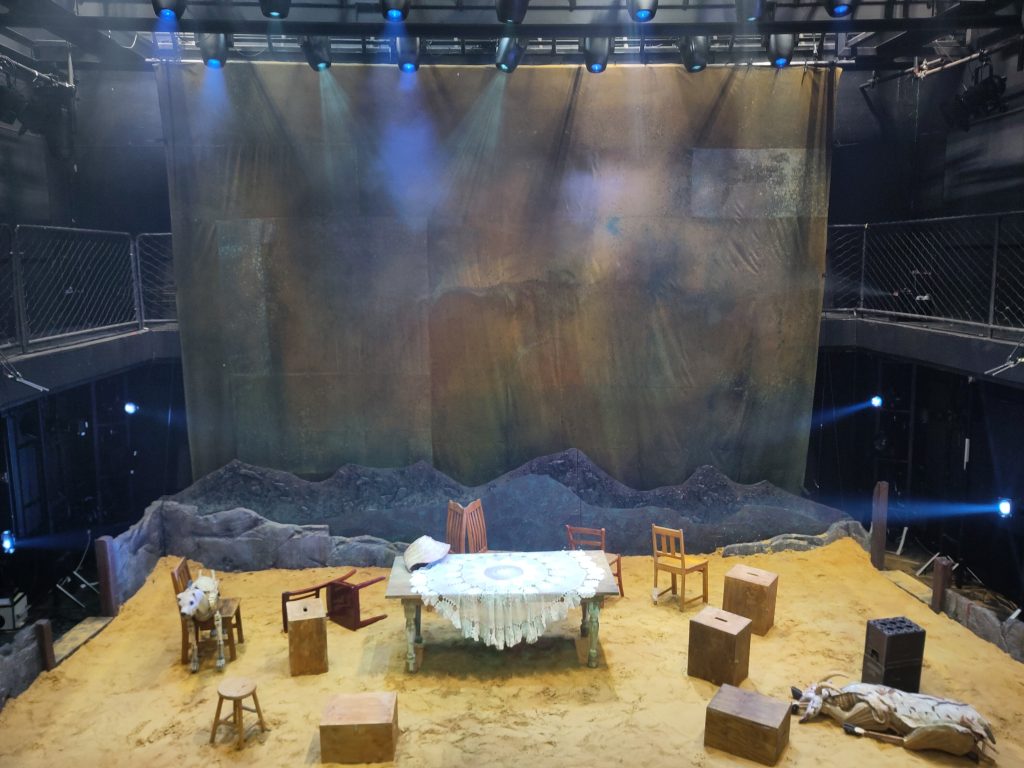
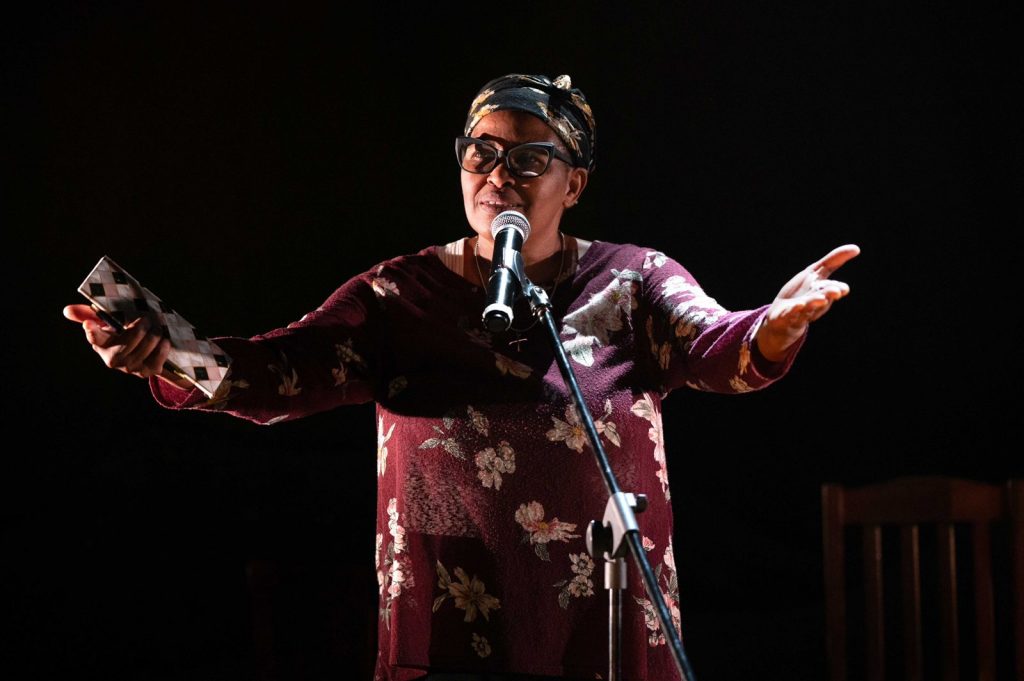
I returned yesterday from Johannesburg where I was attending the opening of a new play called Isitha Sabantu – Zulu for Enemy of the People.

For some months, I have had the privilege to work with the theatre company, Empatheatre, and a team of extraordinary activists, actors, writers, and musicians in the development of this play which tells the story of an environmental defender, Mam Nomsa, who wages a sustained and determined battle to protect her home against an encroaching mine expansion. The play follows the process by which the mine slowly, systematically pulls Nomsa’s community apart, setting neighbours against neighbours, marking Nomsa, who refuses to stop her resistance and refuses to sign her home over to the mine, as an enemy of the people.
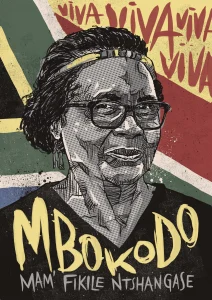
The story is based on the true life of the environmental defender, Fikile Ntshangase, whose resistance to the expansion of a local Coal Mine led to her assasination in her home in 2020. The play was written based on month’s of conversations with and testimony by Fikile’s daughter and fellow activists. In her life, Fikile made many attempts to speak to the law, using all of the law’s avenues for participation – she attended countless consultation meetings where she was lectured to rather than heard, she initiated litigation, again and again, in the courts with some small victories and many huge losses, she took bottles of their water, blackened by the mine, and waved it in the face of the Minister of Mineral Resources, demanding he drink it. Despite her protests and calls for action, her pleading to the government, the mine, the chiefs, the community, she simply was not heard and when she would not yield, she was gunned down.
In South African law, mining affected communities are constitutionally guaranteed consultation, but that guarantee has been systematically hollowed out. Law, with its tiny group of authorised and authoritative authors, is a very poor listener, especially if you are marginalised or impoverished. Consultation, as Fikile’s story illustrates, can be staged as compliance while functioning as foreclosure — a ceremony of listening that produces no change and carries no consequence. Isitha Sabantu inverts this dynamic. The performance is itself a participation process, but one that tells the story of the affected community rather than one that serves the ends of the mining company.
The script is not merely a dramatisation of her story; it functions as a form of legal testimony. The theatre becomes a legal forum. Fikile expressed an understanding of the world in which land, life, and water were not commodities to be traded off against mining royalties and environmental impact assessments. The legal system she encountered spoke a different normative language entirely, one in which her values were legible only as obstacles to be procedurally managed. The play refuses that translation. It insists on making the community’s legal world visible, not as a deviation from official law but as a rival and more legitimate account of what law, in this place, does mean.

By staging her story, Isitha Sabantu does something that formal legal processes rarely achieve for communities like hers: it creates a durable, public record that cannot be lost in procedural delay or dismissed on a technicality. The script endures as evidence. Each performance is a re-opening of proceedings.
Doing Law from the Outside: Connecting Isitha Sabantu and Indigenous Legal Judgments
What unites the Indigenous Judgements Project and Isitha Sabantu is a shared refusal to accept the terms on which law has always been offered to the marginalised: take it or leave it, speak our language or be silent, enter our forums on our conditions or not at all. Both projects occupy the forms and forums of law (the judgment, the consultation, the public proceeding) not to seek law’s approval but to expose its contingency and demonstrate its replaceability. Both insist that the failures of official law were never inevitable; they were choices, and choices can be unmade.
They do this by working from the outside, translating the untranslatable, restoring a normative language that official law refused to hear. Together they suggest that resistant legal writing is not a single method but a disposition: a willingness to treat law not as a fixed text handed down by authorised authors, but as a contested, ongoing, and urgently unfinished project of imagination, open to be written and rewritten in all the voices of those it governs.