When designing prosthetics, it is evident that the most important consideration is their function. After all, what use is a prosthetic leg if it cannot be walked on? Other considerations, such as comfort, lifespan, and the impact of use on the rest of the body, are also included, but one factor is often left out of the conversation: visual appeal. It goes without saying that a primitive peg leg lacks the full range of function and motion of the human leg, and thus, over the past several hundred years, the function of the prosthetic leg has been developed to not only work more like the lost limb but in many ways look like the lost limb. However, some people note that more recently increasing the functionality has lessened the visual relationship of prosthetics and the human body. In some ways this feels like a regression in progress: historians and prosthetis specialists are unsure if archaeologically recovered early prosthetics, such as the Egyptian Toe, were primarily designed for function or appearance.
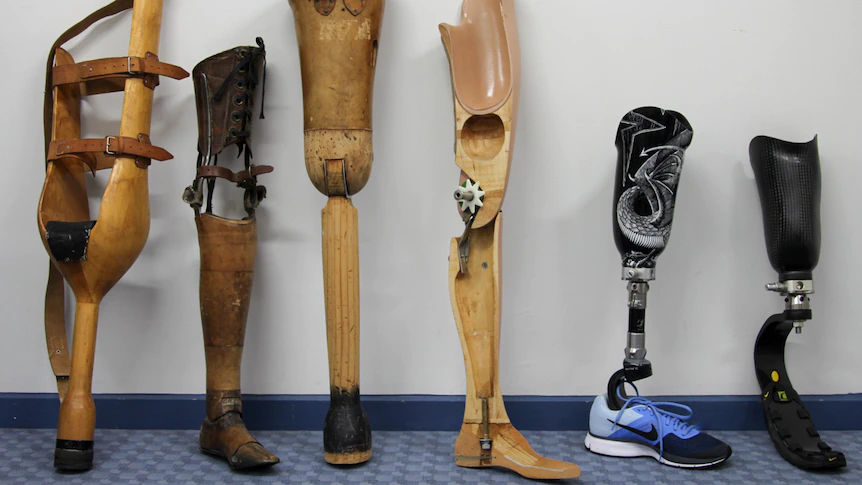
When a person loses a limb, not only their physical health is altered, but a patient’s mental health undeniably takes a toll. Feelings of depression, anxiety and low self-esteem in regards to body image are often experienced by amputees, and these are feelings that can be exacerbated with time; in a study of 207 lower-limb amputation patients, patients who had been amputated 4-6 years ago had the lowest body satisfaction. There are distinct feelings of loss of independence and bodily autonomy, as well as the aforementioned poor body image, which contribute to this. Feeling ‘other’ is common among those with physical disabilities as a result of self-sourced insecurity and insecurity due to social exclusion and discrimination. Many efforts are made in the post-operation treatment of patients to rehabilitate them both physically and mentally by psychologists, physiotherapists and occupational therapists, but often these negative self-perceptions persist.
These negative self-perceptions may go beyond the general physical insecurities and contribute to fashion insecurities. Social pressure to fit in is worse than ever with the dissection of fashion trend cycles into microtrends and the rise of social media. Trying to conform a part of you that does not fit society’s idea of ‘perfect’ into trends that demand perfection can feel demoralising and therefore trying to adapt your prosthetic to your own journey of experimentation with fashion can be a frustrating experience. These sentiments were echoed by Chinese fashion model Xiao Yang, who has worn a prosthetic leg for over 25 years and is one of several in the fashion and art industries who have ventured to add individuality and personality to prosthetics by using accessories such as patterned leg covers or shaped knee caps, developed in collaboration with jewellery brand YVMIN.
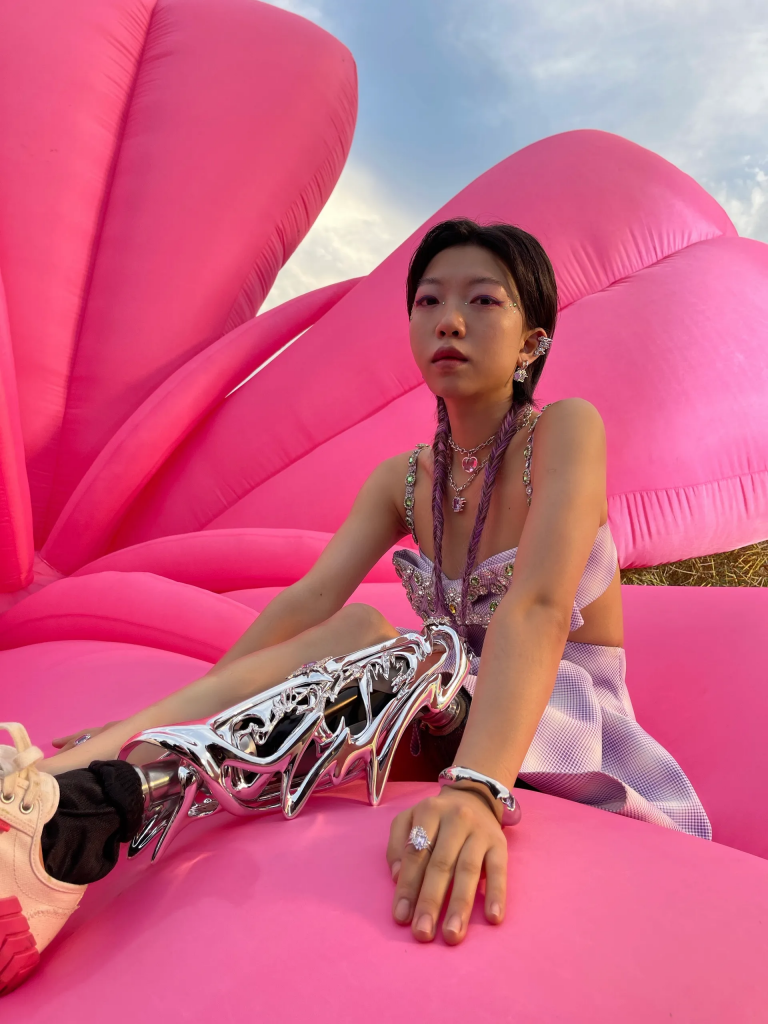
Though Yang’s collaboration with the YVMIN was temporary and specifically for Yang, another company, Alleles Design, had a similar concept and continues to provide custom-manufactured prosthetic covers with thousands of possible designs with the aim of ‘giving the power of self-expression back to [prosthetic wearers]’. You can even design your own using their design tool.
With companies aiming to fill this gap in the market, personalised prosthetics are likely to become more common as knowledge of these accessories grows and the costs decrease. Personalised prosthetics have the potential to reduce body image and self-esteem issues amongst limb-prosthetic users and are a step towards prosthetics that feel more like man than machine.


This is a fair summary of some of the considerations that must be taken into account when designing prosthetic devices. You write engagingly and have a clear narrative. You can improve by building reflection into your blog (there is none at present, and by using hyperlinks to indicate where you found your information.