Mark Jordan, 11 August 2026 8 mins read
England’s housing ‘crisis’ is characterised by a striking contradiction: as housing need reaches new levels, so too does the number of empty homes. This contradiction was brought home to me in vivid detail during my 2025 secondment at Southampton City Council, when I shadowed officers tackling nearly 4,000 empty homes in the city. It was troubling that so many homes were left empty while there were over 8,000 households on the housing waiting list. Standing before an empty home overlooking the River Itchen, it seemed to me that these two figures were deeply connected but there is little in legal scholarship to suggest that the plight of those without housing is relevant – or made relevant – to the owner’s decision to leave housing empty. I was left struggling to understand exactly what role the law played in the making, and unmaking, of empty homes.
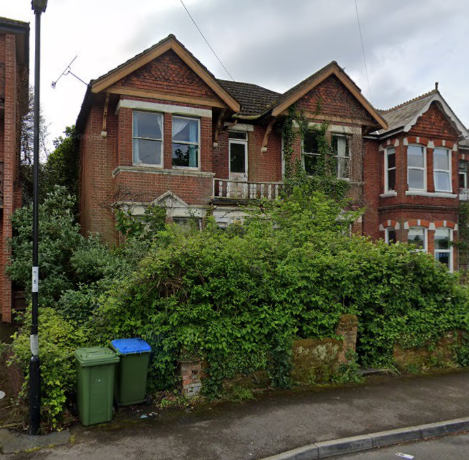
A highly visible empty home in Southampton.
The reasons behind empty homes
In England, there are over 1 million empty homes today and there is growing pressure on policy makers to do more to get these homes into use. Although often associated with property hotspots in major cities, empty homes are on the rise across the world in both rural and urban areas. Concern about empty homes has generated a plethora of policy interventions including those of the carrot variety (subsidies and grants) and the stick variety (taxes, controls, enforcement).
What is driving the proliferation of empty homes? For some, it is simply the result of the forces of supply and demand in operation. Taking this logic further, it has been argued that empty homes are not inherently problematic but rather indicate that the supply of housing is outstripping demand, thereby alleviating affordability pressures. But if this were the case, why is the number of empty homes increasing in cities, such as London, Vancouver or Melbourne, where there is growing unmet need for affordable housing?
Others attribute the phenomenon to the commodification of housing, which has converted housing into an asset class integrated into global financial markets. This distorts housing systems to overproduce housing that is at odds with local demand and need, but also subjects more housing to speculative investment practices, such as Buy-To-Leave, leading to more homes being left empty.
Despite the validity of this explanation, it does not seem to capture the heterogeneity of empty homes I saw in Southampton. Some homes are left empty for economic reasons, but others are left empty for emotional or psychological reasons, including attachment to a former childhood home, grief, anxiety, and family disputes. How could the latter (non-economic) reasons for leaving housing empty be reconciled with the commodification explanation?
The Forest of Bere: from customary forest rights to the capital offences in support of land rights
All these questions led me to the Forest of Bere in the hope that a spring walk among the bluebells might help make sense of the empty home conundrum. The Forest is a short trip from Southampton and aside from providing a pleasant place for a walk, it also has a fascinating history. The Normans made Bere a Royal Forest. Although used by monarchs to hunt deer, the local people had long-standing customary rights, including gathering wood, grazing animals, and hunting.
During the 18th century, these rights came under attack as powerful landowners, deploying their colonial plunder, began buying up forest land. At that time, English land law – conforming to the ownership model of property – provided the owners with strong rights to control the land, exclude others, and preserve it for their hunts.
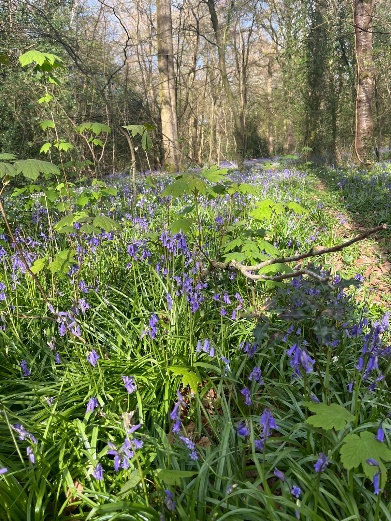
Bluebells in the Forest of Bere.
The conflict between the foresters and the landed elite is recounted in E.P. Thompson’s Whigs and Hunters: The Origin of the Black Act (1975). Thompson describes how foresters responded to restrictions on their use rights by forming bands of men and women that would raid the forest at night, disguising their faces with wood ash. In targeting deer, fences, and symbols of authority, Thompson characterises their actions not as random crimes but as organised social protest.
The state’s response was draconian and involved passage of the Black Act (1723) which created dozens of new capital offenses, including for hunting deer and poaching. For Thompson, the Black Act illustrates how the law is not a set of neutral rules. By defending elite property rights while oppressing and discipling the rural poor, the law functioned as a mechanism of class power.
Law as a legitimation of power – and a constraint on power
However, defending property rights through legal institutions, rather than arbitrary force, carried risks. Governing through law meant that elites could themselves become constrained by the legal rules and principles that gave legal authority its legitimacy. Offences had to be defined, evidence gathered and proved, and juries had to deliver verdicts. Each aspect created space for communities to resist by exposing inconsistencies, not cooperating with prosecutions, and by juries refusing to convict. While this did not transcend the underlying power imbalance animating the conflict, it shows how law cannot wholly be reduced to an instrument of class domination.
The contests also demonstrated for Thompson how law is not separate from society but is embedded in the social and economic relationships that organise everyday life. Because property, markets, and political authority all depend on legal rules, law does more than reflect power, it also shapes, maintains and constrains power. The potential for law to direct and limit power in meaningful ways was understood by the foresters who engaged with the law as a site of struggle, in which competing conceptions of property and justice could be articulated, contested, and potentially institutionalised.
Empty houses as a new site of contestation on the limits of property rights
Thompson’s analysis can help to make sense of how the law shapes the making of empty homes today. Much like it did in the 18th century, English land law continues to provide the owner with strong rights to control land. As Paddy Ireland explains in Property in Contemporary Capitalism (2024) under the ownership model of property, rights are not absolute, but they tend in that direction, manifesting in a presumptive power for the owner to leave housing empty. This is subject to no meaningful obligation to consider how the decision to leave housing empty might impact on those struggling to access housing. The law is not neutral. It privileges owners by empowering them to leave housing empty for economic reasons (luxury Buy-to-leave apartments) or personal or emotional reasons (derelict houses on the Itchen) and enables them to ignore the distributive consequences of leaving housing empty.
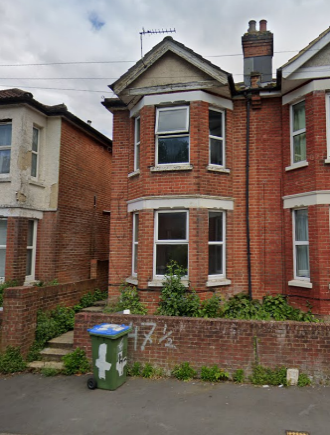
A less visible empty home in Southampton.
Yet during my time at the Council, I heard from Councillors how they were coming under increasing political pressure from the public to do more to tackle empty homes. Just as the law could facilitate the making of empty homes, I learned from officers about the web of legal powers that could be used to unmake empty homes and get them back into use. One such power is the Empty Dwelling Management Order (EDMOs) which enables a local authority to take control of a long-term empty home and use it as social housing.
Empty Dwelling Management Orders: from empty homes to social housing?
EDMOs present a challenge to the ownership model of property by defining the limits of the owner’s right to leave housing empty. They, thereby implicitly challenge the absolutist notion that the owner is free to control housing as they see fit. In doing so, they reflect an understanding that property rights in housing are conditional on fulfilling a social obligation or function. Furthermore, by empowering a local authority to take control of an empty home and use it as social housing, EDMOs draw a connection between the owner’s private decision to leave housing empty and the public plight of those struggling to access housing. In doing so, they make visible, and offer a means of confronting, the distributive implications of the owner’s decision to leave housing empty.
Despite the potential of EDMOs, they are grossly underused. While deep cuts in local authority budgets have reduced capacity for enforcement, the Localism Act 2011 made it much harder for local authorities to obtain an EDMO. This reform increased the qualifying vacancy requirement from six months to two years and required much stronger justification, such as nuisance. Announcing the reforms in January 2011, Eric Pickles the Secretary of State for Communities and Local Government, characterised EDMOs as “draconian and heavy-handed state powers” and argued that reform was necessary to “protect civil liberties” and to safeguard the “fundamental human right … to property” (p18).
The restriction of EDMOs arguably reflects a selective concern to protect the ‘civil liberties’ of owners of empty homes over the rights of those struggling to access housing and thus overlooks how those struggles may be exacerbated the decision of the owner to leave housing empty. In many ways, it illustrates the enduring strength of the ownership model of property, which emphasises the private, absolute, and exclusive nature of the owner’s rights and downplays the notion that ownership is attended with social obligations. Perhaps most significantly, the reform has undermined public enforcement against empty homes and thus arguably helped to facilitate the proliferation of empty homes that has occurred in recent years.
The potential which EDMOs offer in tackling empty homes is greatly limited, but just as the laws controlling the Forest of Bere were contested, the public control of empty homes has become a contemporary site of contestation. These contests involve national campaigns, organised by Action on Empty Homes, as well as grassroots social movements led by tenant unions and others which challenge empty homes and target second homes and the spread of holiday lets. Such contests are important for drawing public attention to the empty homes contradiction and help shift political debate toward the idea that housing should function primarily as homes rather than speculative assets. Much like the foresters of Bere, these campaigns offer valuable insights into how arbitrary property practices can be challenged, and how demands can be articulated for enhanced democratic control of housing and empty homes.
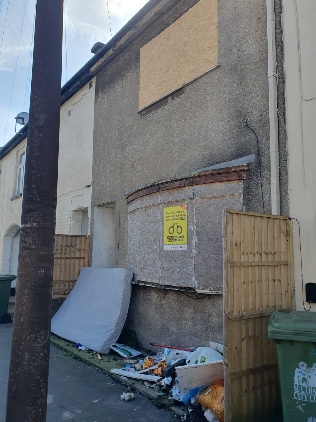
Another highly visible empty home in Southampton.