Highfield Campus facilities

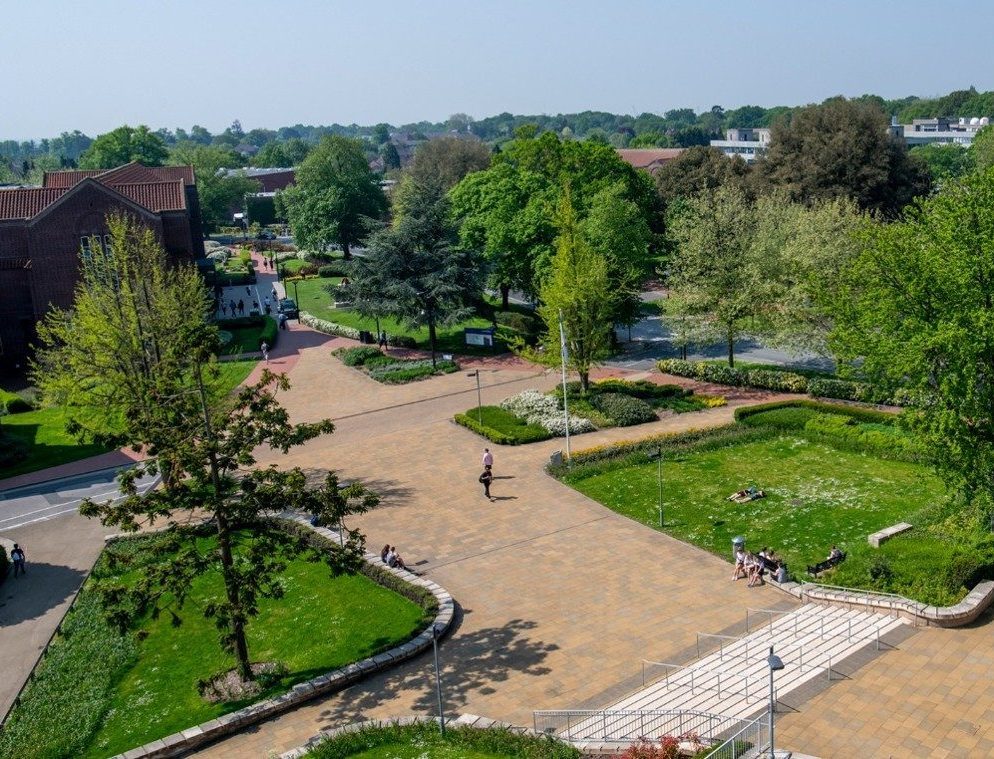
All Summer School sessions will take place at Highfield Campus, which is the central campus of the University of Southampton. Highfield Campus benefits from extensive green spaces, including the rich in biodiversity Valley Gardens area. AS the main campus for the University it is well connected through public transport to the city centre where accommodation will be provided.

The meetings will be located in two main locations: Building 100, The Centenary Building and Building 32, where the Southampton Education School is located.

The nine-storey Centenary Building, opened in September 2019, was designed by Feilden Clegg Bradley Studios. Named in celebration of 100 years of teaching on our Highfield Campus, the Building boasts an impressive range of features including independent study spaces with fantastic views across the campus and the city, an 80-seat Harvard lecture theatre, an MBA suite, numerous private pod study spaces, bookable seminar rooms and large flat-floored teaching spaces. The Centenary Building is unique within our university community, providing a contemporary focal point for our Highfield Campus and many flexible spaces. Building 100 is fully accessible, and equipped with the digital equipment needed for presentations during mentor group meetings and workshops.

Our mentor group sessions, poster sessions and workshops will take place at this location.

You can travel to Southampton by flying to Southampton Aiport (SOU) directly, which serves many European cities such as Paris, Amsterdam, Barcelona, Salzburg, Geneva, Dublin. 

You can also travel to Southampton by flying to London Heathrow (LHR) and London Gatwick (LGW) airports and then continue your journey by either a train or a coach.

There are two train stations you can use to reach Southampton: Southampton Central in the city centre, near the allocated accommodation and Southampton Airport Parkway, which is a short bus ride away from Highfield Campus. You can check train times and fares on the National Rail website.

There are direct links from Heathrow Airport to the city centre and to Highfield Campus via the National Express and Flixbus Coach services.

Travelling from Central Europe is also possible, and a more sustainable option via train using the Eurostar and then National Rail to Southampton train stations.


Visas and Electronic travel authorisation (ETA)

Depending on your nationality, you might need a visa or an ETA for travelling to the UK. You can check if you need a UK visa or ETA following this link. It is important to check your travel eligibility and requirements early to ensure that all documentation is in place as needed to allow you to travel to the UK.

Any costs associated with visas/ETAs are the applicants’ own responsibility. 


Accommodation will be arranged by the Local Organising Committee only for the dates of the event. If you wish to arrive earlier or leave later than the dates specified you will have to make your own arrangements, and cover any additional costs yourselves. 

Our University is located with the city of Southampton, a city of approximately 260,000 residents, of which about 38,000 are University students. Southampton also has a rich history evolving from a Roman settlement to a medieval port and hub for the area. Today it is a modern city, having had to rebuilt after extensive bombings during World Word II, boosting one of the most active ports in Europe. There is a wealth of amenities, restaurants and green spaces to visit, as Southampton is one of the UK’s greenest cities, with over 200 green spaces, including parks, recreation grounds and natural habitats.

You can find out more about events at Southampton following the Visit Southampton website.

.

Healthcare in the UK

The UK’s National Health Service (NHS) provides healthcare services. Eligibility for free NHS treatment can depend on where you live, your immigration status and the type of treatment you need. Travel insurance is strongly recommended, as visitors may be charged for some NHS services.

EHIC cards and travel insurance

If you have a valid European Health Insurance Card (EHIC), take it with you when travelling to the UK. It may help you access medically necessary state-provided healthcare during a temporary stay, but it doesn’t cover every healthcare cost or situation.

Take out travel and health insurance before you travel. An EHIC isn’t a replacement for insurance. A suitable policy can help with costs such as private treatment, emergency travel home, lost medication and cancellations. Check your policy’s cover, exclusions and emergency contact details before leaving.

Further information about Healthcare for those visiting the UK can be found on the UK Government website.